 Our lab has been awarded two grants from the Italian Ministry for University and Research (MUR) as part of the "Progetti di Rilevante Interesse Nazionale" (PRIN) program. As part of the PRIN 2022 PNRR call, our project entitled: "From stem cells to algae and back: circular biotechnology for cellular agriculture and biomass production" was ranked 4th overall in the LS9 scientific sector, and 1st among the "Under 40" category. This project is led by our lab and involves an exciting interdisciplinary collaboration with Alberta Pinnola's plant physiology group at the University of Pavia. The total budget is € 230,861. In this proposal we tackle a pivotal challenge towards the pursuit of a sustainable and circular-economy-based future: how can we provide food within planetary limits for an expanding population with a growing appetite for meat and fish? This is our first research grant in the cellular agricolture space, which we are super excited about. 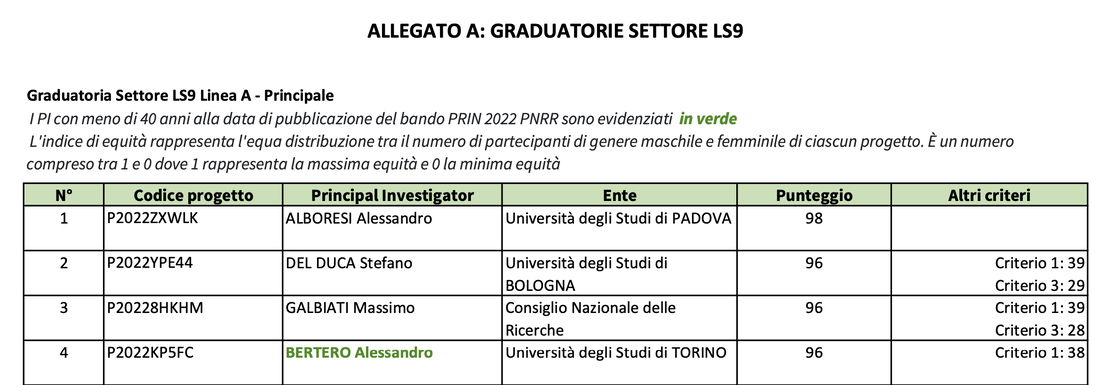 As part of the PRIN 2022 call, our project entitled: "Decoding and leveraging the molecular determinants of myogenic fate through integrative genomics and cell engineering" received a score of 83/100 in the LS2 scientific sector. The project is led by Davide Cacchiarelli's integrative genomics lab at TIGEM and involves the collaboration of our group as well as Annamaria Carissimo's bioinformatics team at CNR. The total budget is € 199,628. The overarching goal of this proposal is to first uncover and then exploit the gene regulatory networks behind cell fate conversion into muscle. The knowledge generated by this proposal will enable large scale, cost-effective generation of mature muscle cells for various applications. These two grants support our emerging lines of research in cardiac regeneration and cellular agriculture. Both grants have a two year duration and will start in the Fall of 2023. We are looking for postdocs motivated to develop these exciting lines of research, so please spread the word and reach out if interested.
0 Comments
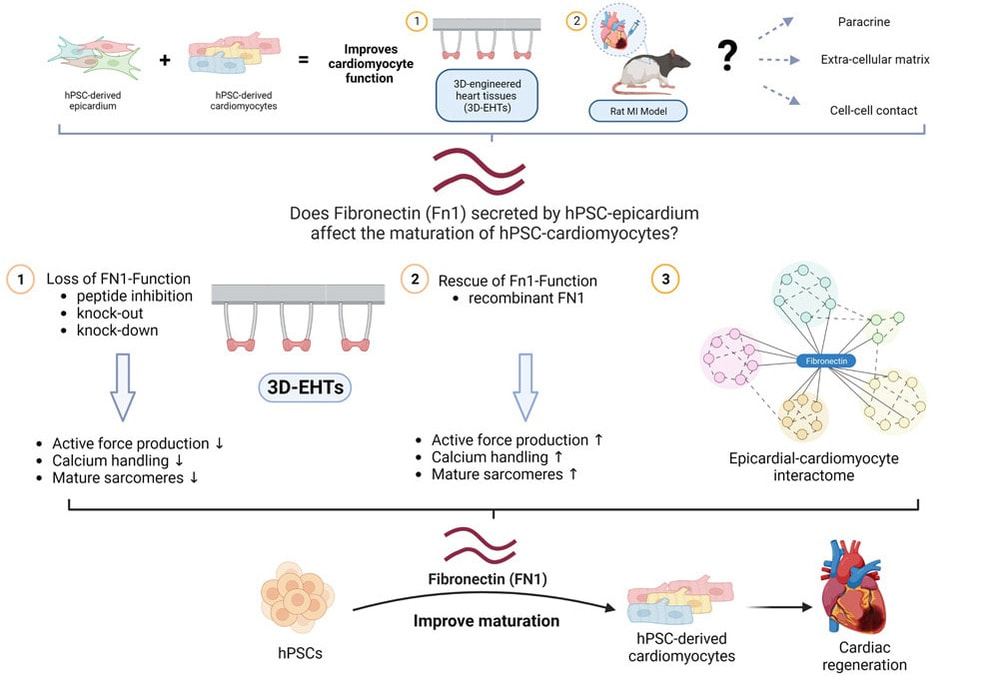
Transatlantic collaboration identifies key molecule for cardiac bioengineering (and regeneration?)3/30/2023  Our friends and collaborators in the Sinha lab in Cambridge published an exciting paper in Stem Cell Reports that reports the key role of an extracellular matrix component, fibronectin, in the maturation of cardiomyocytes seeded in 3D scaffolds together with epicardial cells (forming so-called 3D Engineered Heart Tissues, 3D-EHTs). The study involved a transatlantic collaboration with the Murry lab in Seattle, WA. We were glad to contribute to the genome editing experiments that led to the formal demonstration that fibronectin is required for the pro-maturation activity of epicardial dells.
A previous study from the same collaborative group had identified they key ability of epicardial cells to promote cardiomyocyte maturation both in vitro and in vivo, but the mechanism remained unclear. This study identifies fibronecting as being both sufficient and necessary for this process in vitro, which opens the door to simplified and more reproducible bioengineering applications compared to adding epicardial cells.
Fibronectin may prove key to also boost cardiac remuscolarization in vivo. Indeed, the immaturity of human pluripotent-derived cardiomyocytes (hPSC-CMs) is thought to be a key driver of arrhythmic complications following their transplantation: what if a pinch of fibronectin in transplanted hPSC-CMs improved their safe engraftment and function?There promises to be a third episode of this saga.. |